
Gir and Dhari: Why Gujarat's Quiet Interiors Are India's Best Reverse Vacation Right Now
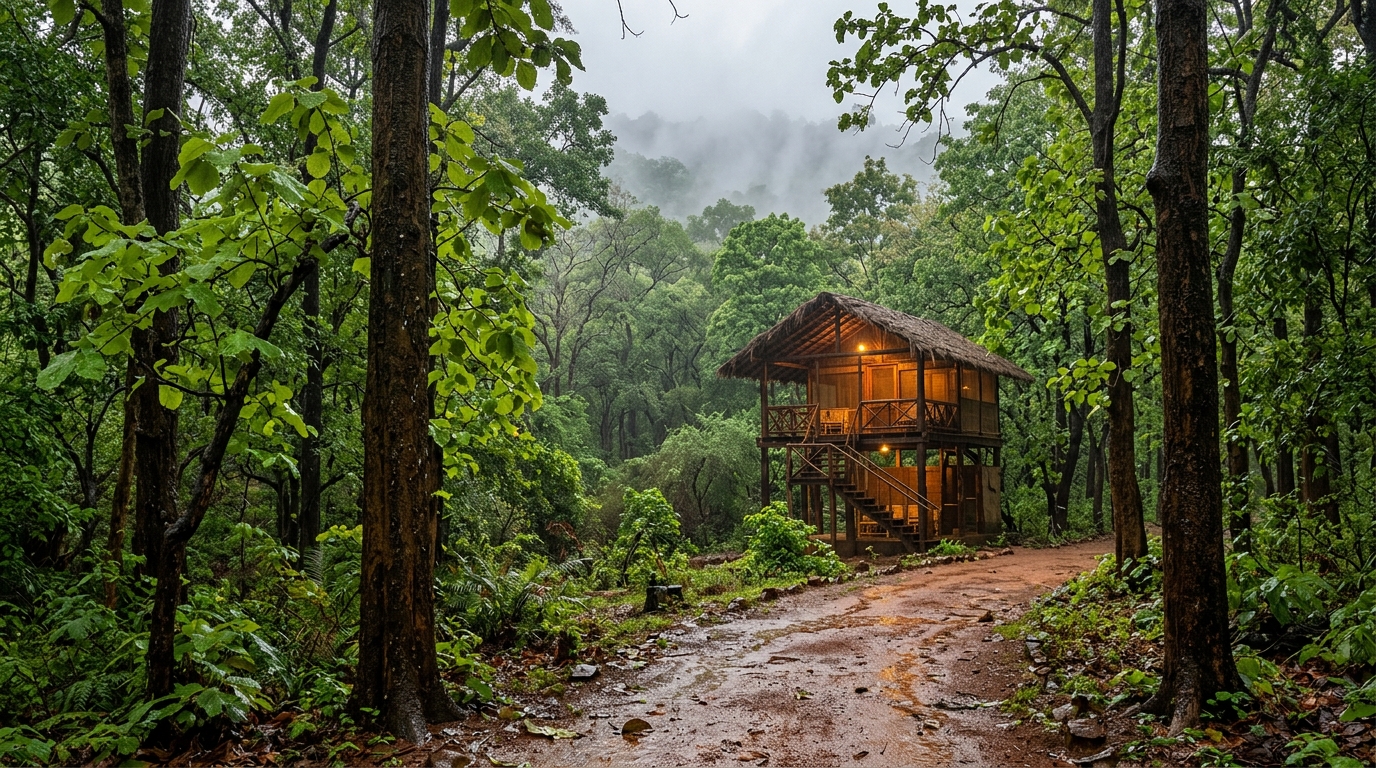
A reverse vacation in Gujarat — choosing Gir's teak-and-acacia silence or Dhari Taluka's plateau farms over the overcrowded monsoon hills of Himachal or Coorg — costs roughly half as much, draws almost no tourist traffic in August, and leaves you feeling like you actually stopped. These two pockets of Amreli district are the most underrated slow-travel destinations in India right now.
What Even Is a Reverse Vacation, and Why Does Gujarat Fit?
A reverse vacation is the deliberate act of going somewhere emptier when everyone else rushes to the same five hill stations. Gujarat's interior in monsoon qualifies perfectly: Gir National Park's buffer zone stays open for nature walks and birding even when the core safari zone closes (June–October), and Dhari — a quiet taluka town 38 km north of Gir — has a cluster of working farms and small eco-stays that see fewer than 200 visitors in the entire month of August. The rain here is steady but not violent, averaging 600–700 mm across July–September, which turns the dry deciduous forest a remarkable green without making roads impassable.
Gir in August: What You Actually Get
The safari gates are shut, which is exactly the point. The Asiatic lion population is denning and moving freely through the buffer zone, and spotting one on a guided nature trail — legal and available through registered local naturalists for ₹800–1,200 per person — is more intimate than any jeep ride. Khodaldham and the Kamleshwar reservoir look genuinely cinematic under monsoon cloud cover. Several jungle lodges in the Sasan Gir area drop their rack rates by 30–45% in the off-season; a comfortable forest-facing room runs ₹2,800–4,500 per night including meals in 2026 estimates.
Dhari Taluka: The Part Nobody Writes About
Dhari sits at the edge of the Girnar hill range's southern spurs, 180 km from Ahmedabad (roughly 3 hours 15 minutes via NH27 and SH7). It is a cotton and groundnut farming town with a small weekly market, two dharamshalas, and three farm-stay operations that opened between 2022 and 2024. Staying on a working farm here — watching groundnut harvest prep, eating unpolished bajra rotla with fresh white butter — is the kind of experience that resets your sense of pace far more efficiently than a luxury resort playlist of 'curated activities'. Farm-stay rates run ₹1,500–2,500 per night, typically inclusive of two home-cooked meals.
How to Plan the Logistics Without Stress
The most practical format is a three-night, four-day circuit from Ahmedabad: one night transit in Junagadh (comfortable budget hotels from ₹900/night), two nights in Sasan Gir or its buffer zone, and one night in Dhari on the return leg. Rajkot Airport is 155 km from Sasan Gir (2 hours 40 minutes by car) and has direct flights from Mumbai and Delhi year-round, which makes this entirely doable as an extended weekend from either metro. August trains on the Veraval line run reliably; the Saurashtra Mail reaches Junagadh in about 9.5 hours overnight from Mumbai Central.
Comparing Your Options: Gir vs Dhari vs the Usual Monsoon Crowd
| Factor | Gir Buffer Zone (Aug) | Dhari Farm Stay (Aug) | Coorg / Manali Peak Season |
|---|---|---|---|
| Avg. stay cost per night (₹, 2026) | 2,800 – 4,500 | 1,500 – 2,500 | 5,500 – 12,000 |
| Drive from nearest airport (km / time) | 155 km / 2h 40m (Rajkot) | 193 km / 3h 15m (Rajkot) | 80–220 km / 3–6h (varies) |
| Crowd level in August | Low | Very low | Very high |
| Ideal group size | 2–6 | 2–4 | Any (but prices compound) |
| Wildlife / nature activity | Buffer walks, birding | Farm trails, village walks | Trekking (rain-dependent) |
One Honest Caveat Before You Book
Gujarat's interior is hot even in monsoon — daytime temperatures hover around 28–32°C in August — and this is not a landscape of dramatic waterfalls or cool misty air. What it offers instead is space, genuine local hospitality, and the unusual pleasure of being in a forest or on a farm where you are not another entry in a reservation queue. If that trade-off sounds appealing, Gir and Dhari will deliver more than they promise.
Frequently asked
Is Gir National Park open for visitors in August?+
The core safari zone of Gir is closed from June 16 to October 15 each year. However, the buffer zone and eco-sensitive areas remain accessible for guided nature walks and birding, which can be arranged through registered local naturalists for ₹800–1,200 per person.
How far is Dhari from Sasan Gir, and can I combine both in one trip?+
Dhari is approximately 38 km north of Sasan Gir, about a 50-minute drive on SH964. Combining both in a three-night circuit — two nights in Gir, one in Dhari — is very practical and adds real variety to the trip without exhausting itinerary padding.
What is the best way to reach Gir from Mumbai or Ahmedabad?+
From Mumbai, the overnight Saurashtra Mail to Junagadh (approx. 9.5 hours) is the most comfortable option, from where Sasan Gir is 43 km by road. From Ahmedabad, it's a 5-hour drive (approx. 360 km) or a short flight to Rajkot followed by a 2-hour 40-minute drive.
Are farm stays in Dhari Taluka suitable for solo travellers?+
Yes, though the experience is most cost-effective for pairs or small groups of two to four. Most farm stays in Dhari offer single-occupancy options at ₹1,500–2,000 per night with meals included, and hosts are generally accustomed to independent travellers.